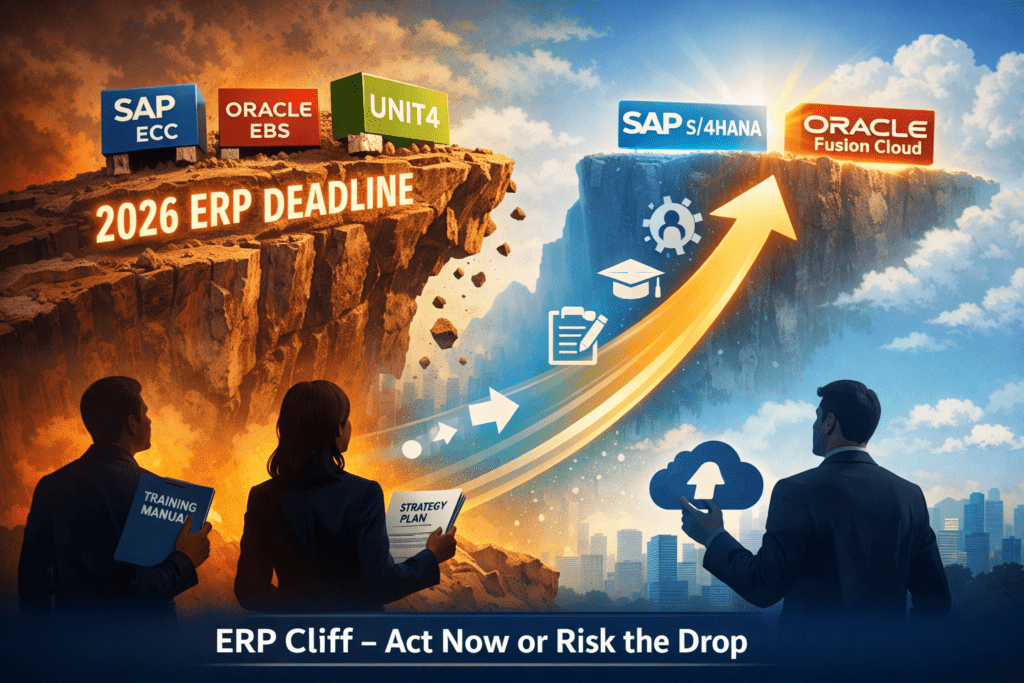
The 2026 ERP “Cliff”: Why UK Public Sector Units Must Act Now.
The UK public sector faces a looming deadline. Legacy ERP systems, including older SAP releases, Oracle EBS or Unit4 are approaching end-of-life. This means vendors will stop support, security updates, and compliance patches. As a result, organisations risk operational disruption, audit issues, and rising maintenance costs.
Moving to modern platforms such as SAP S/4HANA or Oracle Fusion Cloud is no longer optional. With hard deadlines fast approaching, early action is critical. Importantly, training and change management must be planned well ahead of go-live.
What the “ERP Cliff” Means for Public Sector Organisations
Waiting until the last minute increases pressure on teams and budgets. As the deadline draws closer, the risk of rushed decisions and overloaded IT staff rises. Therefore, organisations must prioritise structured transition planning and early learning enablement.
Why Waiting for Training Is Risky and Expensive
Investing early in role-based learning and ongoing change support builds confidence. Teams become familiar with new processes well before key milestones. Moreover, early training reduces mistakes, support tickets, and rework post-go-live.
Phased Change Management Is Cheaper Than Failure
ERP transformation is about people, not just technology. A phased change management approach breaks big goals into achievable steps. A change and training partner engaged earlier in the project bring people enablement central tothe programme and is a strategy which spreads costs and learning over time. Organisations which delay change, and rely on a just in time model risk incurring higher expenses later due to crisis management and disruption.
Effective change management includes stakeholder engagement, communication planning, and pilot testing. When users understand why change is happening and how it affects them, adoption improves. In contrast, rushed, ad-hoc learning leads to confusion and resistance.
Real-World Success with iTrain’s Change and Learning Programmes
iTrain’s experience with large scale transformations demonstrates the value of structured training and change support. For example:
- In the Transport for London Case Study, iTrain delivered comprehensive SAP readiness training. The programme reduced post-go-live support calls and improved system confidence among users.
- The Alstom Power Case Study shows how blended learning and role-based support enabled a diverse global workforce through a complex ERP transition.
- With the Tourism Development & Investment Company Case Study – Abu Dhabi, iTrain helped implement change management and training across finance and procurement, supporting a successful transformation with minimal disruption.
Each example illustrates how early planning and tailored learning programmes prevent last-minute chaos.
How iTrain Can Help UK Public Sector Units Prepare
With iTrain’s guidance, teams gain confidence, clarity, and practical skills. Early engagement accelerates adoption and reduces long-term costs. Organisations that plan ahead avoid the pitfalls of rushed implementations.
Act Now to Avoid an ERP Cliff
Wherever you are in your project life cycle contact iTrain today. Our specialists will help you assess training needs, manage change effectively, and provide a focused service to build confident user communities. Whether acting early, or you require specialised knowledge to “get you over the line” iTrain is here to help you reduce risk, control costs, and ensure a smooth transition.